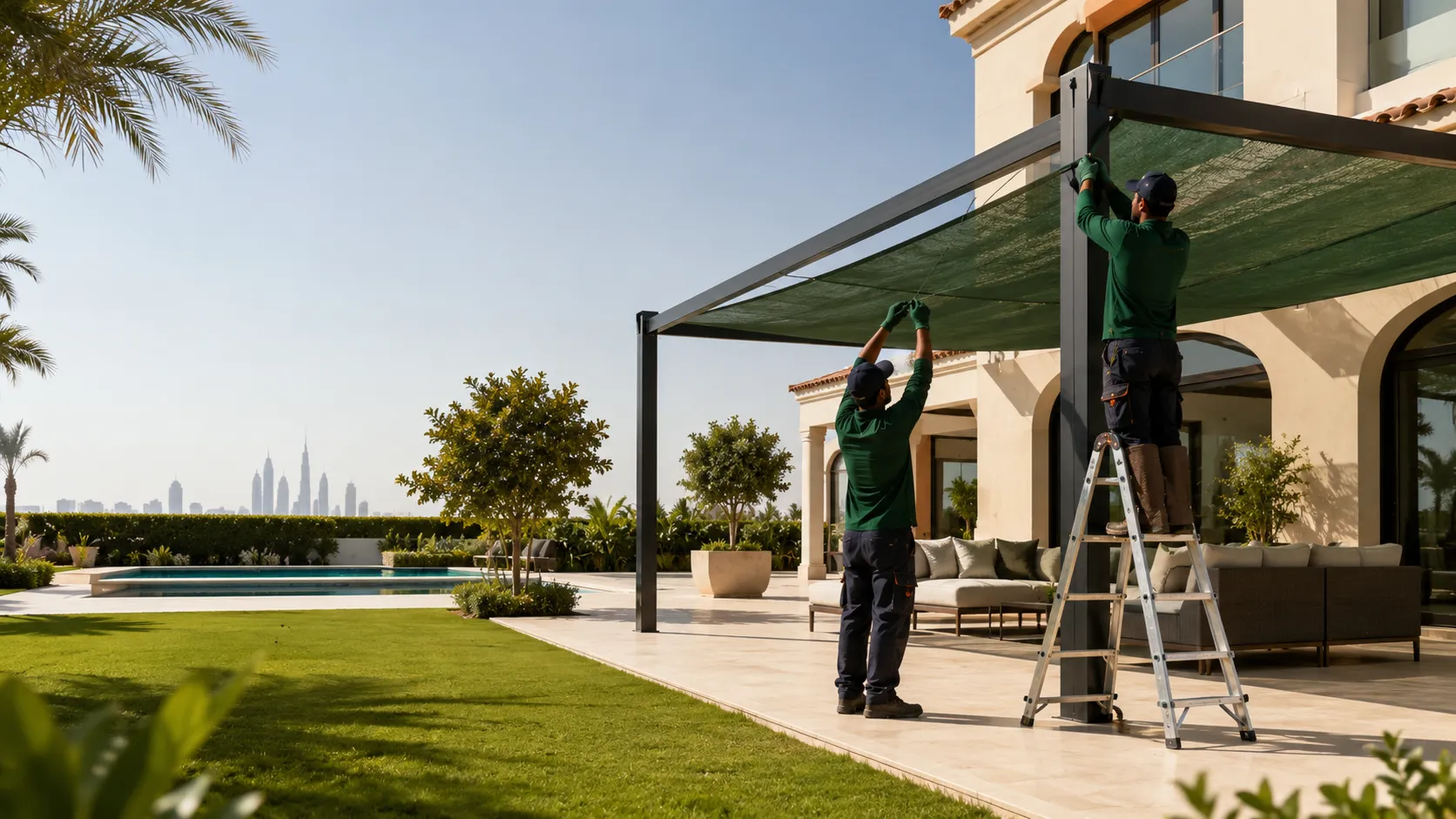
If you live or work in Dubai, you know how brutal the summer sun can be. Temperatures cross 40 degrees Celsius. UV levels stay dangerously high all year. Without protection, that kind of heat damages crops, vehicles, equipment, and people. That is exactly where shade nets come in.
Shade nets are one of the most practical and cost-effective solutions for outdoor heat control in Dubai. They block UV rays, reduce surface temperature, and improve safety across farms, parking lots, and construction sites. But not every shade net works the same way. The material, density, and installation method all matter a great deal in a climate like Dubai.
This guide walks you through everything you need to know. From material selection to installation steps to common mistakes, you will find clear and useful information here.
What Are Shade Nets?
Shade nets are protective mesh systems that reduce how much sunlight reaches a surface. They are made from synthetic fibers, mostly HDPE (High Density Polyethylene). The mesh filters solar radiation instead of fully blocking airflow.
They work through three simple mechanisms:
- Mesh density controls how much sunlight passes through
- Polymer fibers resist damage from UV exposure
- Air gaps in the mesh allow heat to escape instead of trapping it
In Dubai, shade nets are not just a comfort upgrade. They are a necessity. The combination of heat, UV stress, and sandstorms makes outdoor exposure a real risk for crops, equipment, and workers.
Why Dubai Climate Demands Shade Net Systems
Dubai is one of the most extreme climates on earth for outdoor materials. Here is what shade nets have to handle:
- Temperatures regularly exceed 40 degrees Celsius in summer
- UV index stays high for most of the year
- Sand particles travel fast during wind events and cause surface abrasion
- Wind applies strong lateral pressure on large flat surfaces
Each of these factors creates a different kind of stress:
UV radiation slowly breaks down polymer fibers. Heat causes materials to expand and shift. Wind creates repeated mechanical pressure on anchors and poles. Sand wears down surface coatings over time.
Shade nets are designed to handle all of these conditions together. But the material and design must be chosen carefully for the Dubai environment specifically.
Which Materials Are Used in Shade Nets?
The three most common materials used in shade nets are HDPE, PVC-coated mesh, and polypropylene. Each has different strengths and best use cases.
HDPE (High Density Polyethylene) is the top choice for Dubai. It offers strong UV resistance and lasts between 5 and 10 years under desert conditions. It works well for farms, parking areas, and industrial sites.
PVC-coated mesh offers medium UV resistance and lasts 3 to 6 years. It is a solid option for temporary or semi-permanent shading needs.
Polypropylene has the lowest UV resistance and breaks down within 1 to 3 years. It is only suitable for short projects where cost is the main concern.
| Material | UV Resistance | Lifespan | Best Use |
| HDPE | High | 5 to 10 years | Farms and parking |
| PVC Mesh | Medium | 3 to 6 years | Temporary shading |
| Polypropylene | Low | 1 to 3 years | Short projects |
For most applications in Dubai, HDPE is the right choice. It gives the best return over time because it does not need to be replaced as often.
What Is GSM and Why Does It Matter?
GSM stands for grams per square meter. It tells you how dense the fabric is. A higher GSM means a heavier, denser net with more shading power.
Here is how GSM breaks down in practical terms:
- 50 to 70 GSM gives light shading. Good for plants that still need sunlight but need protection from harsh midday rays
- 80 to 120 GSM gives medium shading. Ideal for parking areas and outdoor seating
- 150 to 250 GSM gives heavy shading. Used for industrial yards and construction sites
The key tradeoff with GSM is airflow versus protection. A higher GSM blocks more heat and UV but reduces ventilation. A lower GSM lets more air through but provides less shade.
Choosing the right GSM comes down to your specific use case. A vegetable farm needs different density than a car parking structure.
Installing Shade Nets in Dubai: Step-by-Step Process
Installing shade nets in Dubai requires special attention because the soil is mostly loose sand. Sand reduces the natural holding strength of anchors, so the structure needs to compensate with a stronger base.
A proper installation system includes:
- Steel poles for vertical support
- Concrete bases poured around each pole for stability
- Ground anchors to resist lateral wind pressure
- Tension cables to distribute load and prevent sagging
Step by step process:
- Mark the full layout on the ground before any digging
- Dig and pour concrete bases for each steel pole
- Allow the concrete to set fully before attaching the net
- Attach the shade net to the frame edges
- Run tension cables across the structure
- Tighten cables evenly so the net stays flat and stable
Getting the tensioning right is critical. A net that is too loose will sag in the heat. A net that is too tight will put excess stress on anchors during wind events.
What Engineering Factors Affect How Long a Shade Net Lasts?
Five main factors determine how long your shade net will perform well in Dubai:
UV exposure level. The higher the UV exposure, the faster untreated fibers break down. Always choose a net with a UV stabilization rating that matches your climate zone.
Wind speed. Repeated wind pressure creates fatigue at joints and anchor points. A structure designed for Dubai wind loads will last much longer than a generic design.
Thermal expansion cycles. Materials heat up during the day and cool at night. This daily cycle slowly shifts tension levels in the net. Quality materials handle this better.
Sand abrasion. Sand carried by wind acts like fine sandpaper on surfaces. It wears down coatings and weakens fiber surfaces over time.
Anchor depth. Shallow anchors in sandy soil will fail in a strong windstorm. Deep anchors with wide concrete bases are essential.
Where Are Shade Nets Used in Dubai?
Shade nets serve multiple industries across Dubai. The use case determines which GSM and structure type is needed.
Agriculture and farming uses shade nets to protect crops from direct sun exposure. Nets reduce water evaporation from soil, stabilize temperature around plants, and extend the growing window for heat-sensitive crops.
Parking areas use shade nets to reduce heat buildup inside parked vehicles. A shaded car can be 15 to 20 degrees cooler inside compared to one left in direct sun. Nets also protect paint and interiors from UV fading.
Construction sites use shade nets for worker safety. Outdoor workers in Dubai face serious heat stress during summer months. Shade nets reduce that risk and help projects stay on schedule.
Industrial yards use heavy GSM nets to protect equipment, stored materials, and outdoor workspaces from UV damage and heat buildup.
What Does Shade Net Installation Cost in Dubai?
Cost is determined by several factors working together. There is no single price because every project has different requirements.
The main cost drivers are:
- GSM level of the material chosen
- Total area to be covered
- Type of steel structure required
- Labor intensity based on terrain and access
- Depth of anchor system needed
As a general rule, higher UV resistance costs more upfront but saves money over time because the net lasts longer. A cheap net that needs replacing every two years will cost more than a quality HDPE net over a ten-year period.
Wind-resistant designs also cost more due to additional steel and deeper anchoring. But in Dubai, that investment is worth it. A collapsed shade structure costs far more to repair than it would have cost to build properly in the first place.
What Mistakes Reduce Shade Net Lifespan?
These are the most common mistakes that cause shade nets to fail early in Dubai:
Wrong tensioning during installation. If the net is too loose, it sags and collects heat and debris. If it is too tight, wind events pull anchors out of the ground.
Weak anchoring in sandy soil. Standard anchors used in solid ground are not enough in Dubai sand. Concrete bases and deeper anchor points are required.
Choosing low UV-rated material. A net without proper UV stabilization will begin to degrade within one to two years in Dubai sun.
Skipping wind load calculations. This is one of the most serious errors. A structure not designed for local wind conditions can collapse during a storm and cause serious damage or injury.
Ignoring maintenance. Sand and dust build up on shade nets over time. This adds weight and reduces airflow. Regular cleaning extends net lifespan significantly.
What to Check Before Buying a Shade Net
Use this checklist before making any purchase:
- UV stabilization rating matches your climate zone
- GSM level suits your specific use case
- Wind load rating is appropriate for Dubai conditions
- Material type offers the right lifespan for your budget
- Supplier can confirm installation method for sandy soil
- Warranty covers UV degradation and structural defects
Take your time with these checks. A shade net is a structural investment. The right choice upfront will save you money, time, and stress over the years ahead.
Summary: What You Need to Know
Shade nets are a practical and necessary solution for managing heat and UV exposure in Dubai. Here is a quick recap of the key points from this guide:
- HDPE is the best material for Dubai conditions due to its high UV resistance and long lifespan
- GSM determines how much shade and airflow your net provides. Match it to your use case
- Installation in Dubai requires concrete bases and deep anchoring because the soil is loose sand
- Wind load calculations are not optional. They are essential for structural safety
- Higher upfront cost on better materials saves money over the long term
- Regular maintenance extends the life of any shade net system
Whether you are protecting a farm, a parking area, a construction site, or an industrial yard, the right shade net system will make a real difference in safety, comfort, and cost.
Ready to Install a Shade Net in Dubai?
Choosing the right shade net is one thing. Getting it installed correctly in Dubai conditions is another. Mistakes in material selection or installation can lead to early failure, structural collapse, or ongoing maintenance costs that add up fast. If you want shade nets that are built to last in Dubai heat, wind, and sand, it pays to work with experienced professionals who know the local environment.
Get in touch today for a free consultation and site assessment. We will help you choose the right material, GSM, and structure for your specific needs and make sure your installation is done right the first time.