
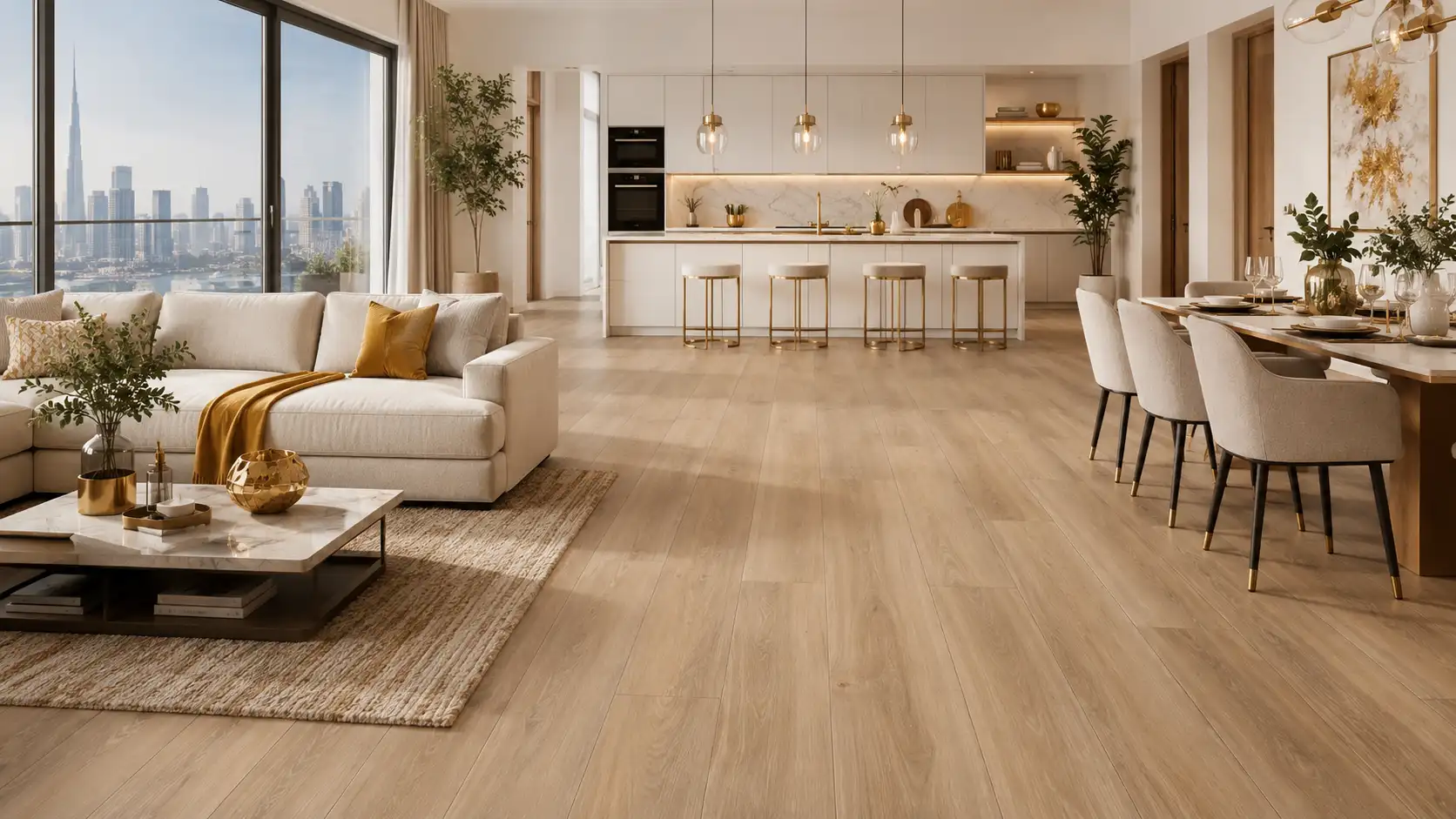
High-quality SPC vinyl works well in many Dubai homes. It handles heat, cool AC air, and daily foot traffic better than older vinyl. But results still depend on a few things. These include sunlight through big windows, how strong your AC is, the state of your subfloor, and how well the floor gets fitted. Pick the right product. Fit it the right way. Then vinyl can last for many years in a Dubai home.
Dubai’s Climate Creates Specific Flooring Requirements
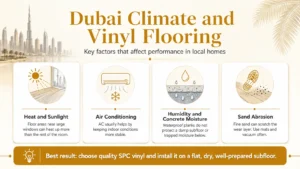
Dubai homes face harsh outdoor heat, strong sun, cool indoor air, coastal humidity, and fine airborne sand. Each of these affects flooring in its own way. A good vinyl floor must handle all of them at once, not just one.
Extreme Outdoor Heat and Cooler Indoor Temperatures
Outdoor air can pass 40°C in summer. Indoor AC often keeps rooms near 22 to 24°C. This gap is not a severe shock to flooring. It is a normal daily shift, and most vinyl handles it well. The bigger issue is often heat near glass doors and windows. Floors there can get much hotter than the rest of the room.
Can Air Conditioning Damage Vinyl Flooring?
No, not with normal use. AC keeps indoor temperature and humidity steady. That actually helps vinyl flooring rather than harming it. Problems tend to show up for other reasons. Planks may not have been left to adjust to room temperature first. Direct sun may hit one spot for hours each day. Expansion gaps may have been skipped. Or the home may have sat without AC before the floor went in.
Humidity, Condensation and Concrete Moisture
Humidity in the air is not the same as water trapped under a floor. Coastal humidity affects comfort. It can also cause minor surface condensation. But the bigger risk comes from other sources. These include plumbing leaks, rising damp, and moisture left in a concrete slab that has not fully cured. Waterproof planks resist spills on top. They do not stop moisture building up underneath, in the glue or underlay layer.
Sand Abrasion in Apartments and Villas
Fine sand travels indoors on shoes. It settles into carpets and floor gaps. Every step grinds these grains against the wear layer. Over time, this dulls the surface. Entrance mats at every door help a lot. So does regular vacuuming on a hard-floor setting. Quick sweeping after time outdoors also cuts down on wear.
SPC Vinyl Provides the Strongest Climate Stability
For most Dubai homes, SPC vinyl is the stronger pick over standard flexible LVT. That said, not every SPC product beats every LVT product. Quality still varies within each type.
SPC Flooring and Traditional LVT Compared
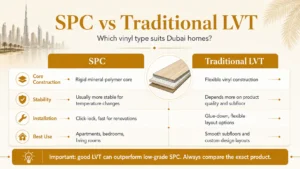
SPC has a dense mineral-plastic core that stays rigid. LVT is thinner and bends more easily. SPC usually clicks together with no glue. It also tolerates small subfloor flaws better. LVT can be glued down for a lower profile. This suits commercial spaces or rooms with limited floor height. Both types come in different wear-layer thicknesses. So the build type alone does not decide how tough a floor is.
The Rigid Core Supports Dimensional Stability
The dense core in SPC gives the locking joints something solid to grip. This cuts down on gaps, lifting, and movement between planks. But SPC is not immune to change. It still shifts a little with temperature swings. That is why installers leave a small gap around the edges of a room.
Wear Layers, UV Coatings and Locking Systems
A thicker plank does not always mean a tougher surface. What protects a floor day to day is the wear layer on top. UV coating and joint strength also matter. Before you buy, check the wear-layer thickness in millimetres. Ask about UV protection. Get the residential warranty terms in writing. For more on how these products are made, see this guide on what vinyl flooring is and how it is made.
Practical Benefits for Dubai Homes
Vinyl flooring changes daily life at home in clear ways. It offers drier floors, softer footing, quieter rooms, easier cleaning, and faster renovations.
Water Resistance in Kitchens and Utility Areas
An SPC core resists water on its own. But that does not make the whole floor waterproof. Water can still travel through joints, damaged edges, or gaps near cabinets and appliances. For kitchens and laundry rooms, check if the maker approves the product for that space. Also ask how the edges get sealed during fitting.
Softer Footfall Than Marble and Porcelain
Vinyl feels warmer and softer underfoot than marble or porcelain. It also absorbs some impact instead of bouncing it back. This makes a real difference in bedrooms, living rooms, kids’ rooms, and home offices. These are rooms where people stand and walk barefoot for long hours.
Acoustic Comfort in Dubai Apartments
Pairing vinyl with the right underlay can lower the sound of footsteps between floors. It is not fair to call this soundproofing. It reduces noise, but does not block it fully. Many buildings also have their own rules on underlay or renovation approval. It is worth checking those first.
Slip Resistance and Household Safety
A textured surface may look slip-resistant. But texture alone does not prove that. Look for a tested slip-resistance rating from the maker. Also check guidance on intended use and the right cleaning products. The wrong cleaner can strip a floor’s grip over time.
Limitations That Homeowners Should Consider
No flooring works equally well everywhere, and vinyl is no different. These points deserve their own attention. They should not sit hidden inside fitting or cleaning tips.
Direct Sunlight, UV Fading and Surface Heating
Large glass doors and windows can push floor heat well above room temperature in direct sun. This uneven exposure can cause the colour to fade unevenly over the years. Blinds, curtains, window film, and UV-resistant finishes all help slow this down.
Scratches, Indentation and Furniture Damage
Vinyl handles daily foot traffic well. But it stays weak against sharp objects, dragged furniture, high heels, and heavy weight from things like piano legs. Sand grit adds to this risk, since it acts like fine sandpaper under shoes.
Wet Rooms and Outdoor Areas
Not all vinyl suits shower floors, balconies, terraces, or spaces with standing water and open heat. Some products are made only for dry indoor rooms. Always check the maker’s approved use list before fitting vinyl in these spots.
Product Quality Varies Across the Market
Cheap vinyl often has a thin core, a weak locking joint, a short warranty, and little paperwork. These shortcuts show up later as gaps, noise, or early wear. Ask suppliers for test certificates and full warranty terms before you commit to a product.
Installation Controls Vinyl Flooring Performance
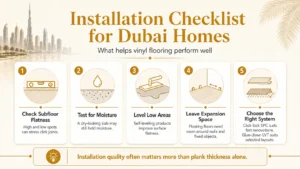
Even the best plank on the market can fail on a poor subfloor. Fitting quality often matters more than the product itself. This deserves real thought when planning flooring solutions in Dubai.
Subfloor Flatness and Cracked Concrete
High spots and low spots under a floor put stress on the locking joints. Small shrinkage cracks in concrete are often just cosmetic. But any crack that shows ongoing movement needs a professional check before flooring goes down.
Moisture Testing and Surface Preparation
A good installation starts with a moisture test on the concrete. Dust, old coatings, and any dirt should then be cleared from the surface. Skipping this step is one of the top causes of glue failure and plank lifting later on.
Self-Leveling Compounds and Floor Correction
Self-leveling compounds smooth out small dips and bumps in a subfloor. They do not fix deeper structural issues. They also cannot stop moisture that keeps rising from below. If a floor keeps shifting after leveling work, the cause needs a closer look.
Expansion Gaps and Transition Profiles
Vinyl needs a clear gap around the edge of a room. This also applies near columns, door frames, kitchen islands, and long hallways. The exact gap size depends on room size and the product used. There is no single measurement that fits every job. Installers should follow the maker’s spacing guide for each project.
Click-Lock SPC or Glue-Down LVT?
Click-lock SPC suits fast home renovations well. It needs no drying time and can be walked on almost right away. Glue-down LVT gives more freedom for custom layouts. It also suits some commercial spaces. The right choice depends on the project timeline, floor height limits, and design goals.
Property-Specific Applications Across Dubai
How vinyl performs depends more on how a home gets used than on which area it sits in.
Apartments and Rental Renovations
Click-lock SPC suits rental units well. It goes in fast and can come out later without harming the original floor. Before starting, check with building management for approval. Confirm allowed work hours. Ask about any limits on lift access or noise.
Villas with Large Glazed Areas
Villas often have open floor plans, patio doors, and big windows. This means more sand enters the home. It also means stronger sun across wider areas. Homeowners should plan for transition strips where the maker asks for them. This matters most between indoor rooms and patio-facing spaces.
Kitchens, Bedrooms and Living Rooms
Each room asks something different from a floor. Kitchens need water resistance near sinks and appliances. Bedrooms gain the most from acoustic comfort and soft footing. Living rooms with big windows need care around sun exposure and surface wear.
Vinyl Compared with Common Dubai Flooring Options
Here is how vinyl stacks up against other flooring types often used in Dubai homes.
| Feature | Vinyl (SPC/LVT) | Porcelain Tile | Natural Marble | Laminate / Engineered Wood |
| Comfort underfoot | Soft, warm | Hard, cool | Hard, cool | Soft to medium |
| Water resistance | Strong core, assembly varies | Very strong | Weak, needs sealing | Laminate: weak; wood: fair |
| Heat resistance | Fair | Strong | Strong | Fair |
| Scratch resistance | Fair | Strong | Fair | Fair |
| Installation speed | Fast | Slower | Slowest | Fast to moderate |
| Repair options | Swap single plank | Hard to match | Can be repolished | Wood can be refinished |
Vinyl vs. Porcelain Tile
Vinyl feels softer and quieter underfoot. It also goes in faster. Porcelain handles heat and scratches better. It also suits fully wet areas with more confidence.
Vinyl vs. Natural Marble
Vinyl uses printed designs. It weighs less and needs less upkeep. Marble offers natural veining and can be polished for years. It also carries a premium value that printed floors cannot fully match.
Vinyl vs. Laminate and Engineered Wood
Laminate has a fibreboard core that reacts poorly to standing water. Engineered wood handles moisture a bit better but still needs care. Neither matches vinyl’s water tolerance. Unlike engineered wood, vinyl cannot be sanded down and refinished once it wears.
Maintenance Requirements in Dubai Conditions
Regular care keeps sand, sun, moisture, and furniture from wearing down a vinyl floor too soon.
Daily Sand and Dust Removal
Place mats at every entrance. Vacuum on a hard-floor setting rather than a beater brush. Wipe up spills right away. Damp mop with a cleaner made for vinyl. Skip harsh additives in your mop water, since some can dull the surface finish.
Protection from Sunlight and Heavy Furniture
Curtains, blinds, and window film cut down on direct sun near glass doors. Furniture pads under table and chair legs stop scratches and dents. Moving rugs now and then also helps. It stops one patch of floor from fading while the rest stays shaded.
Repairing and Replacing Individual Planks
Click-lock planks can often be swapped out one at a time. This does not disturb the rest of the floor. Glue-down planks are harder to remove. They need more care to avoid harming nearby pieces. Either way, keep a few spare planks from the original box. Colour can shift slightly between production runs.
Cost, Lifespan and Property Value
Looking only at the price per square metre misses most of the real cost picture.
Initial Material and Installation Costs
The final price depends on product grade, wear-layer thickness, and pattern detail. Subfloor condition and site access also play a part. Prices shift over time, so always check current rates with a local supplier rather than relying on old figures.
Expected Service Life in Dubai
How long a vinyl floor lasts depends on foot traffic, sun exposure, and sand control. Cleaning habits, fitting quality, and the product’s warranty also play a role. There is no single lifespan figure that fits every home. Ask suppliers for warranty length as a more solid guide.
Value for Homeowners and Rental Properties
Fast fitting, easy cleaning, and local plank repair can all cut down on renovation disruption. It is not fair to claim vinyl always raises rent or resale value. That depends on the property, the area, and the overall finish quality.
Final Assessment for Dubai Homeowners
High-quality SPC vinyl suits many Dubai homes. But sun control, indoor cooling, subfloor state, and fitting quality still decide the final result.
When Vinyl Flooring Is a Strong Choice
Quality SPC works well in air-conditioned apartments and villas. This holds true for bedrooms, living rooms, home offices, kitchens, and rental renovations. This works best when sun exposure is managed and the subfloor is properly prepped.
When Another Flooring Material May Perform Better
Outdoor areas, showers with constant standing water, and zones with open direct heat often need another option. Projects that call for natural stone or refinishable wood are also better served by other flooring types.
Vinyl Flooring Selection Checklist
Before you choose vinyl for a Dubai home, check these points:
- Sun exposure in the room
- How the room will be used day to day
- Subfloor state and moisture level
- Wear-layer thickness and product specification
- Warranty length and terms
- Expansion gap requirements
- Any building approval needed before work starts
For more on product options, visit this page on vinyl flooring in Dubai, brought to you by Home Geek.
Frequently Asked Questions
Does Vinyl Flooring Expand in Dubai’s Heat?
Yes, temperature changes make vinyl expand and contract a little. Picking SPC, leaving a proper gap during fitting, and cutting sun exposure all keep this movement in a safe range.
Can AC Cause Vinyl Planks to Separate?
Not on its own. AC keeps indoor conditions steady, which helps flooring overall. Separation usually comes from other causes. These include poor acclimatising before fitting, weak locking joints, an uneven subfloor, or gaps left too tight.
Is Vinyl Flooring Waterproof?
The core in many vinyl planks resists water. But that is not the same as a fully waterproof floor. Water can still reach the subfloor through joints, damaged edges, or poor sealing near walls and fixtures.
Can Vinyl Flooring Be Installed Over Tiles?
Often, yes. If the tiles are flat, stable, and dry, they can work as a base. This depends on the flooring maker approving the fit over an existing hard surface.
Is SPC Better Than Tile for Dubai Homes?
SPC gives more comfort underfoot and a faster fit. Porcelain tile gives stronger resistance to heat, scratches, and constant moisture. The better pick depends on the room and how it gets used.






One Response