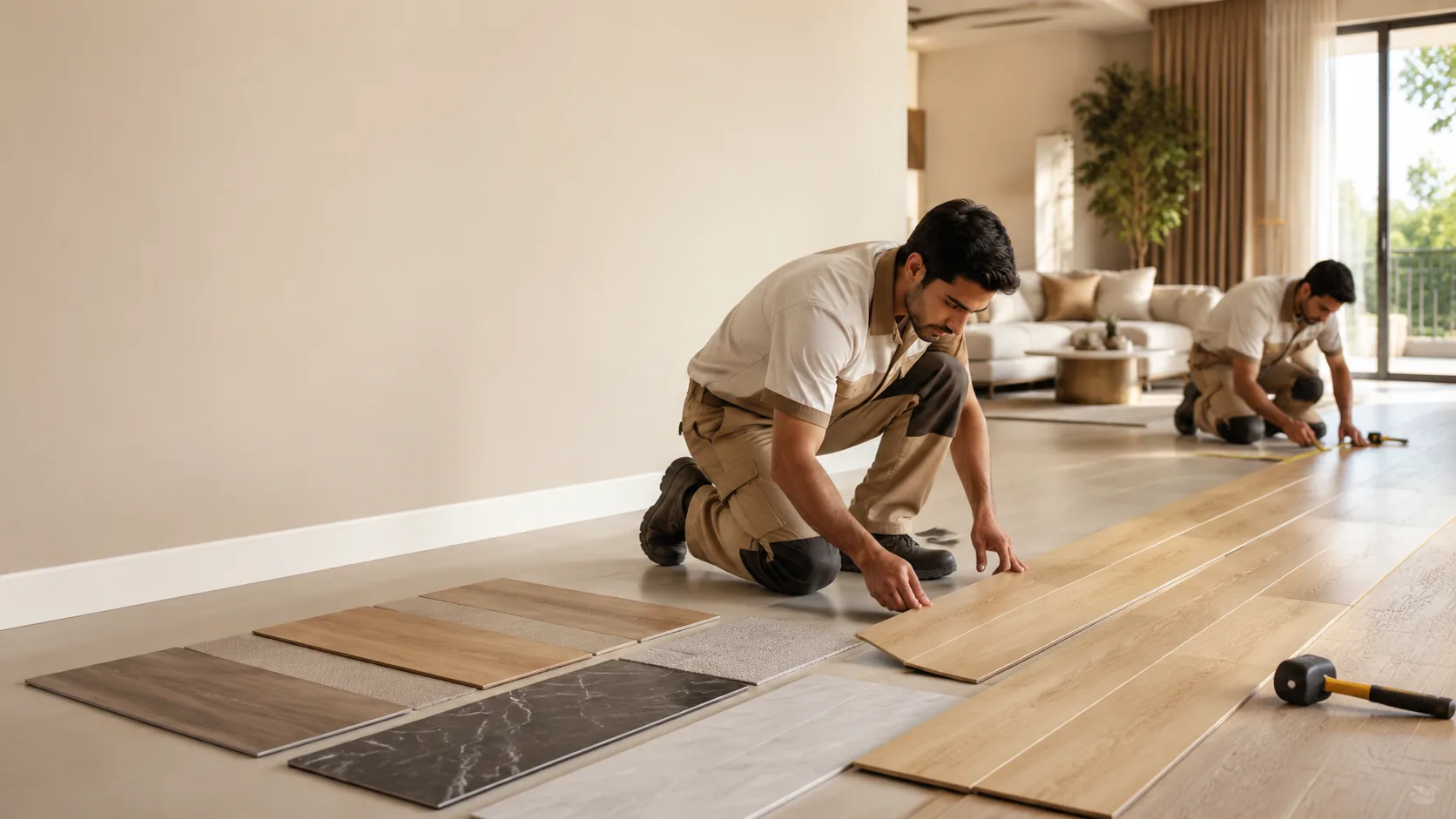
Vinyl flooring comes in five main types. LVP copies wood. LVT copies tile or stone. SPC uses a dense rigid core. WPC uses a softer composite core. Sheet vinyl comes in rolls. These categories often overlap, since a plank can be both LVP and SPC at the same time.
This guide compares all five types by construction, comfort, water performance, installation, traffic suitability, and cost. It gives a clear way to pick the right vinyl floor for a specific room or budget, whether the goal is a wood look, a stone look, or a tough surface for busy areas of the home from HomeGeek.
What Are the Main Types of Vinyl Flooring?
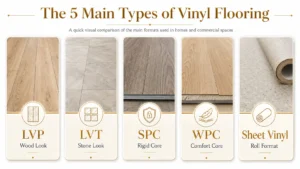
Each term describes a different part of the same product.
- LVT: luxury vinyl tile, shaped like tiles, made to copy stone or ceramic
- LVP: luxury vinyl plank, shaped like planks, made to copy wood
- SPC: stone plastic composite, a dense rigid core used inside many planks and tiles
- WPC: wood plastic composite, a lighter rigid core used inside many planks and tiles
- Sheet vinyl: flooring sold in wide rolls instead of planks or tiles
LVT and LVP describe the shape and look of the floor. SPC and WPC describe what sits inside the floor. A single product can carry more than one of these labels at once, so the terms are not separate product lines.
How Is Modern Vinyl Flooring Constructed?
Most vinyl flooring uses five layers stacked from top to bottom. A clear coating sits on top to protect the surface. Below it sits the wear layer, which resists scuffs and scratches. Under that sits the decorative layer, which prints the wood or stone design. The core layer gives the plank its shape and strength. The backing layer sits at the bottom and adds stability or cushioning.
Total plank thickness and wear layer thickness measure two different things. A thick plank can still have a thin wear layer. Layer thickness and material choice vary by manufacturer. Check both numbers before buying. Do not judge a floor by thickness alone.
What Does the Wear Layer Do?
The wear layer is the clear top layer that protects the printed design below it. A thicker wear layer usually supports heavier daily use, but coating quality also plays a part. This layer controls surface scratches and scuff marks. It does not control how well the core resists dents from furniture or heavy objects. Grit, pets, and daily foot traffic all wear down this layer over time.
Why Does the Core Type Matter?
The core controls how stiff, quiet, and stable a floor feels underfoot. A flexible core bends and feels softer. Rigid SPC and WPC cores feel firmer and more solid. A rigid core can hide minor surface texture in the subfloor below. It cannot fix an uneven or unstable subfloor on its own. The right core depends on the room and how much daily traffic it gets.
What Is Luxury Vinyl Plank?
LVP is vinyl flooring cut into long plank shapes that copy the look of real wood. Planks often show wood grain, knot marks, bevelled edges, and wide boards, much like timber flooring. LVP can use a flexible core, an SPC core, or a WPC core. The format does not lock in one type of core.
Installers can fit LVP with click-lock joints, glue-down methods, or loose-lay sheets. This depends on the product chosen. LVP works well in living rooms, bedrooms, kitchens, rental properties, and home offices. Remember that LVP describes the shape and look of the floor, not one fixed core type.
What Is Luxury Vinyl Tile?
LVT is vinyl flooring shaped like tiles, made to copy stone, ceramic, concrete, or marble. Where LVP mimics wood boards, LVT mimics the square or rectangular look of tile flooring, including grout-effect lines between pieces.
LVT can use glue-down, click-lock, or rigid-core construction, much like LVP. It suits kitchens, bathrooms, shops, apartments, and offices where a stone or tile look is wanted without the weight of real stone. Groutable LVT exists too. It must be a product built for grout. A standard click-lock tile is not, since its joints are not made to hold grout in place.
What Is SPC Vinyl Flooring?
SPC stands for stone plastic composite, sometimes called stone polymer composite. It uses a dense core made from PVC mixed with mineral fillers such as limestone powder. This density gives SPC strong dent resistance. It also gives a firm locking joint and solid dimensional stability.
SPC feels firmer underfoot than WPC, with less give when you walk on it. Most SPC products use a click-lock floating installation. SPC suits busy homes, hallways, kitchens, retail spaces, homes with pets, and rooms with heavy furniture. Even with its strength, SPC still needs a flat, dry, and stable subfloor to perform well over time.
What Is WPC Vinyl Flooring?
WPC stands for wood plastic composite, also called wood polymer composite. Formulas differ between manufacturers. The core is generally lighter and more cushioned than SPC. This softer core makes WPC feel warmer and quieter underfoot. There is a bit more give when you walk across it.
WPC suits bedrooms, living areas, apartments, and family rooms where comfort and sound reduction matter most. The trade-off is that its softer core can dent more easily under weight. This includes narrow furniture legs or heavy items left in one spot for a long time.
SPC vs WPC: Which Rigid Core Is Better?
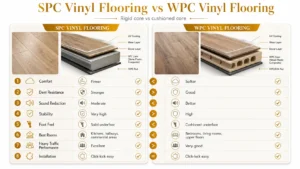
SPC suits dent resistance and heavy daily traffic. WPC suits comfort underfoot and sound control. Neither core is better in every case, since the right choice depends on the room and how the floor will be used.
| Feature | SPC | WPC |
| Core density | Higher | Lower |
| Foot feel | Firmer | Softer |
| Dent resistance | Stronger | Fair |
| Sound reduction | Fair | Better |
| Weight | Heavier | Lighter |
| Traffic suitability | High traffic | Moderate traffic |
| Common rooms | Kitchens, hallways, shops | Bedrooms, living rooms |
Product quality can matter more than the category label alone. Before choosing, compare the wear layer thickness, locking joint strength, warranty terms, core density, and the rooms the manufacturer approves for each product.
What Is Sheet Vinyl Flooring?
Sheet vinyl is flooring sold in wide rolls rather than individual planks or tiles. Because it comes in large sheets, it creates far fewer seams across a room. Fewer seams make sheet vinyl a common choice for bathrooms, kitchens, laundry rooms, clinics, rental properties, and budget-focused projects.
Sheet vinyl often includes a cushioned backing layer and comes in a wide range of design patterns. It still needs proper subfloor preparation. Bumps or debris underneath can telegraph through to the surface over time. Installation takes real skill to fit and seam correctly. Repairs can be hard, since damaged sections are harder to replace than a single plank. Sheet vinyl resists surface water well, but the seams, edges, and subfloor condition still affect how it performs against moisture.
Flexible Vinyl vs Rigid-Core Vinyl
Flexible vinyl bends easily and sits close to the subfloor, which makes it common in glue-down installations across large open areas. Rigid-core vinyl, including SPC and WPC, holds its shape and often floats above the subfloor using click-lock joints, which supports faster installation.
| Feature | Flexible vinyl | Rigid-core vinyl |
| Main advantage | Bends well, suits large areas | Fast floating installation |
| Main limitation | Needs a very smooth subfloor | Adds more height to the floor |
| Best use | Glue-down commercial spaces | Residential floating floors |
Flexible vinyl often suits glue-down commercial jobs with rolling loads. Rigid vinyl often suits homeowners who want a quicker floating installation with less disruption.
Which Installation Method Matches Each Vinyl Type?
Vinyl flooring uses four common installation methods. These are click-lock, glue-down, loose-lay, and peel-and-stick. Each method suits a different level of traffic, subfloor demand, and repair access. Installation method sits apart from surface format and core type. The same LVP product might come in more than one installation style.
Glue-down floors resist movement well and suit rolling loads. Loose-lay floors use friction and weight to stay in place. They use no glue and no locking joints, which makes removal easy. Peel-and-stick floors use an adhesive backing and suit small budget projects, though they offer less durability. Every method still depends on expansion gaps, the right adhesive, a moisture test where needed, and a flat, stable subfloor.
When Should You Choose Click-Lock Vinyl?
Click-lock vinyl suits fast floating installation and easier future removal. It works well in many residential rooms without heavy structural change. The floor still needs a clear gap around the edges of the room and a flat subfloor underneath. Fixed cabinets, kitchen islands, and other heavy permanent units can block the floor’s natural movement. Plan around them during layout.
When Should You Choose Glue-Down Vinyl?
Glue-down vinyl suits large spaces, rolling loads, heavy foot traffic, and commercial areas. It bonds directly to the subfloor. This limits movement and lets single planks be replaced without lifting the whole floor. Moisture testing, the right adhesive, and careful subfloor preparation shape how well it performs. Removal usually takes more labour than a floating floor.
Which Vinyl Flooring Type Is Best for Each Room?
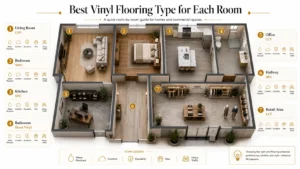
The table below matches common rooms with a suitable vinyl type. No vinyl floor fixes serious moisture problems or a badly damaged subfloor, so proper preparation still matters no matter which type is chosen. In Dubai homes, extra factors such as sand, strong sunlight, air conditioning, and slab moisture also shape the right pick for whether vinyl flooring suits Dubai homes.
| Room | Recommended type | Main reason | Installation note |
| Living room | LVP (SPC or WPC) | Wood look with good comfort | Floating click-lock works well |
| Bedroom | WPC | Soft, warm, quiet underfoot | Floating click-lock |
| Kitchen | SPC | Strong water and dent resistance | Check edge sealing at cabinets |
| Bathroom | Sheet vinyl or SPC | Fewer seams, good water resistance | Confirm wet-area rating |
| Basement | SPC | Handles slab moisture better | Moisture test the subfloor first |
| Office | LVT or SPC | Durable under rolling chairs | Use chair mats where needed |
| Retail space | SPC or glue-down LVT | Handles heavy daily traffic | Glue-down for rolling loads |
| Rental home | Click-lock LVP or LVT | Fast fit, easier removal | Confirm landlord approval |
| Pet-friendly home | SPC | Strong dent and scratch resistance | Keep nails trimmed, clean grit often |
| High-traffic hallway | SPC | Firm core resists wear | Add entrance mats |
Which Vinyl Flooring Type Offers the Best Value?
Value depends on more than the sticker price. It also depends on installed cost, expected wear, maintenance needs, repair access, comfort, and how hard the floor is to replace later. Sheet vinyl often suits budget-led projects because of its lower material and installation cost. SPC often suits heavy-use areas where its strength justifies the price over time. WPC can be worth a higher price where comfort and sound control matter more than raw durability. Glue-down LVT can offer strong long-term value in commercial spaces, since single planks can be repaired without replacing the whole floor.
How Should You Choose Between LVT, LVP, SPC, WPC and Sheet Vinyl?
Choose LVP for a wood look. Choose LVT for a stone or tile look. Choose SPC for a firm, stable floor with strong dent resistance. Choose WPC for a softer, quieter floor with more comfort underfoot. Choose sheet vinyl for fewer seams and a lower overall cost.
Beyond the visual pick, check moisture exposure in the room, expected foot traffic, subfloor condition, the installation method available, wear layer thickness, warranty terms, and whether the manufacturer approves the product for that specific room. These factors decide how well any vinyl floor performs once it is fitted, more than the category label alone. For general background on the material, see what vinyl flooring is, and for local fitting support, review flooring services in Dubai.
Frequently Asked Questions
Is LVT the Same as LVP?
Both belong to the wider luxury vinyl flooring family. LVP uses plank shapes with wood designs, while LVT uses tile shapes with stone, ceramic, or other patterns. Both can use flexible, SPC, or WPC construction underneath.
Is SPC Better Than WPC?
SPC is usually stronger for dent resistance and heavy traffic. WPC is usually better for comfort and sound control. Product specifications and installation quality still affect how each floor performs in real use.
Is Sheet Vinyl Better for Bathrooms?
Sheet vinyl can suit bathrooms well because it creates fewer seams than planks or tiles. Perimeter gaps, pipe penetrations, subfloor moisture, and proper waterproofing still matter. The full installation should not be called automatically waterproof.
Which Type of Vinyl Flooring Is Best for Pets?
SPC or a durable LVP with a strong wear layer usually works best for pets. Core density supports dent resistance from nails and paws, while the surface layer protects the printed design. Regular grit removal and furniture pads still help protect the surface.
Can Vinyl Flooring Hide an Uneven Subfloor?
No vinyl type safely hides major unevenness, movement, cracks, or moisture in the subfloor. Rigid cores may bridge very minor surface texture, while flexible vinyl tends to reveal defects through visible telegraphing. Proper subfloor preparation before installation remains essential for every vinyl type.